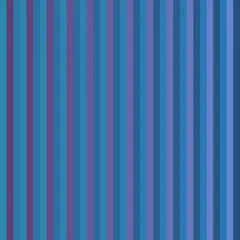
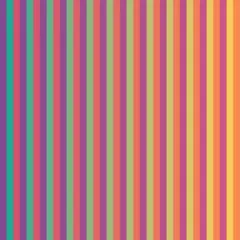
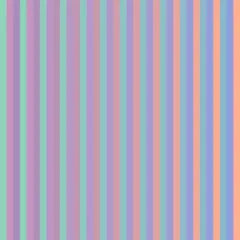
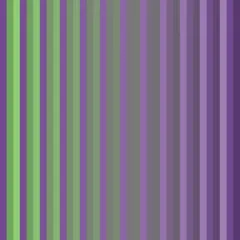
Intervals in Numbers
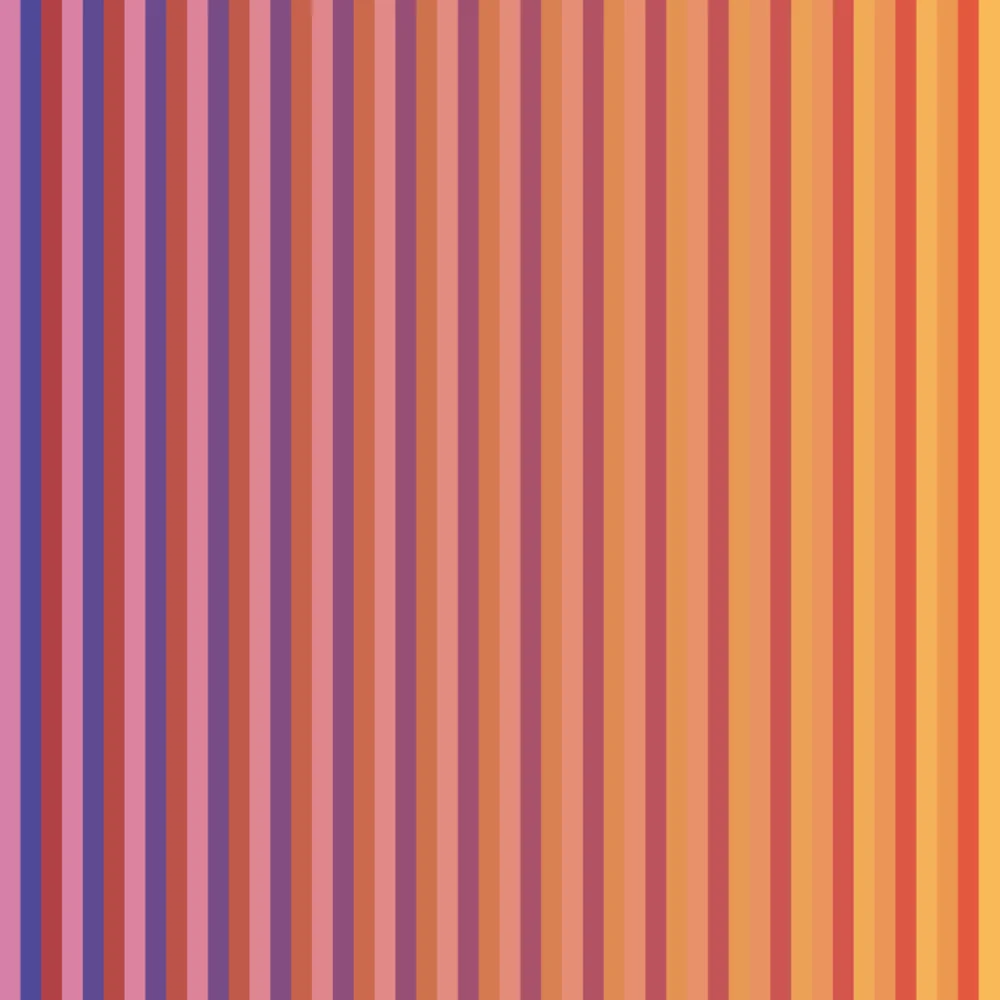
Every piece of Intervals is decided by a single hash. Run one hundred million of them through the script and a pattern shows: the colors almost always travel. With no palette rule at all, they stood still twice.
Analysis by Benjamin Meadows. Intervals is by Jeff Davis, CC BY-NC 4.0.
01What a hash decides
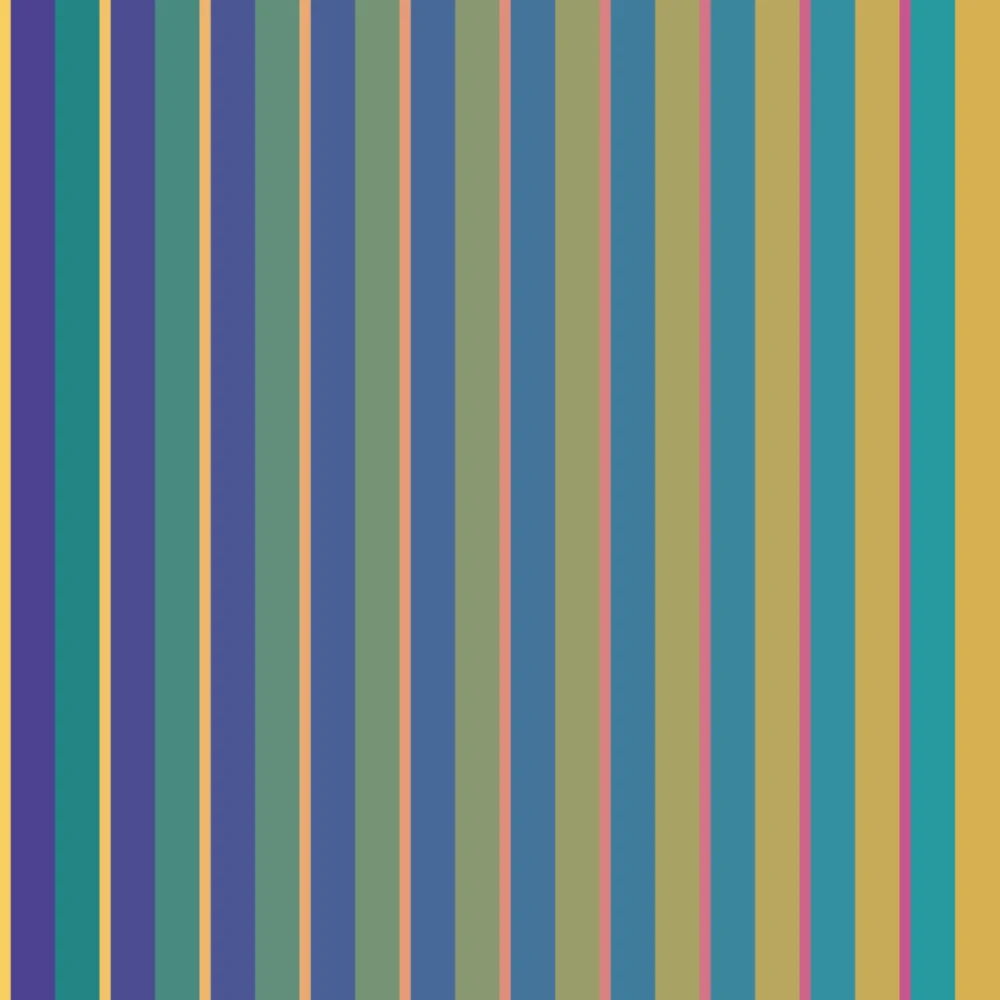
A hash is 64 hexadecimal characters. The script reads it as a seed and makes a short list of choices. This piece is what one hash produces.
The hashes here are one fixed, reproducible sequence: hash i is the SHA-256 of the text intervals-r3:i.
First, how many bars: one of eight counts, from 15 to 72. Six of the counts are equally likely, near each. The two extremes come up half as often.
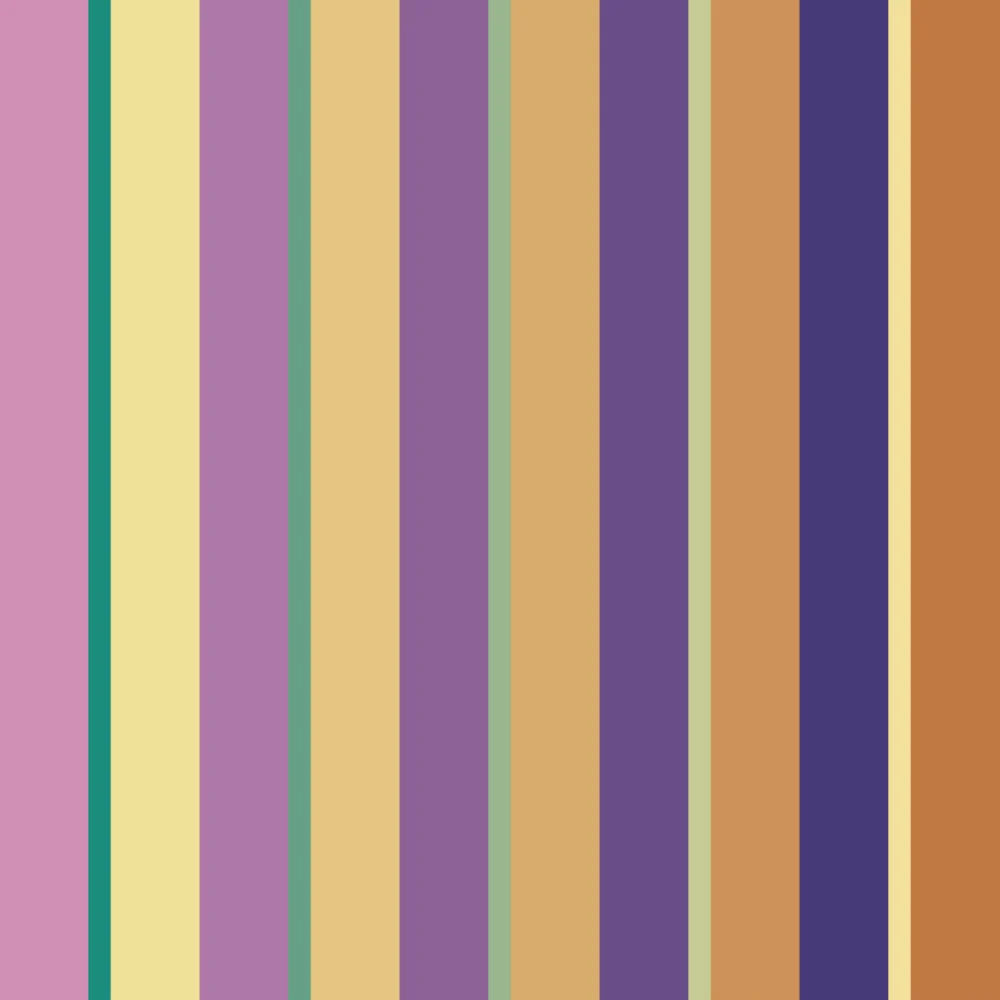
Which way the bars run is a coin toss: vertical. Bars are all the same width in of pieces. In the rest, each of the three color intervals gets its own bar width, in a ratio such as 1:2:4.
02Seven palettes
Then a color variant. Six of them hold the colors to a rule. The seventh option is no variant at all, and it is the one most pieces get.
The script weights the choice. More than half of all pieces get no variant; Achromatic is kept to one in a hundred. One hundred million hashes land on those weights almost exactly.
03When nothing blends
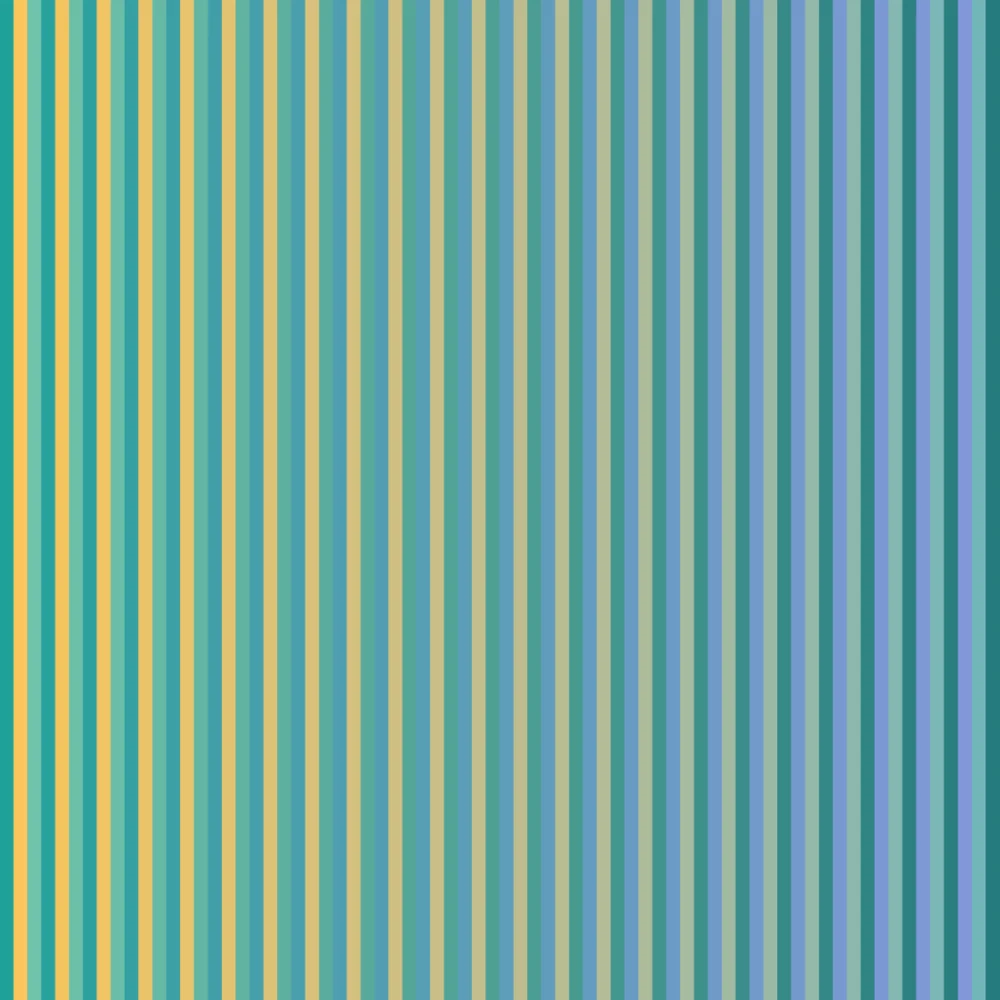
The three intervals alternate bar by bar, and each travels from its own start color to its own end color. Sometimes start and end are so close that the interval does not visibly change. The stripes still alternate, but nothing shifts across the piece.
Call a piece no-blend when all three intervals move less than 2 units in CIELAB, close to the commonly cited threshold for a just-noticeable difference.
of the hundred million are no-blend, and of those are Monochromatic. But raw counts mostly follow how often a variant is picked.
The fairer question is how often each variant fails to blend once it has been chosen. For Monochromatic it is about once in : its widest interval typically travels only units.
With no variant, of pieces have an interval that travels 20 units or more.
04The two that stand still
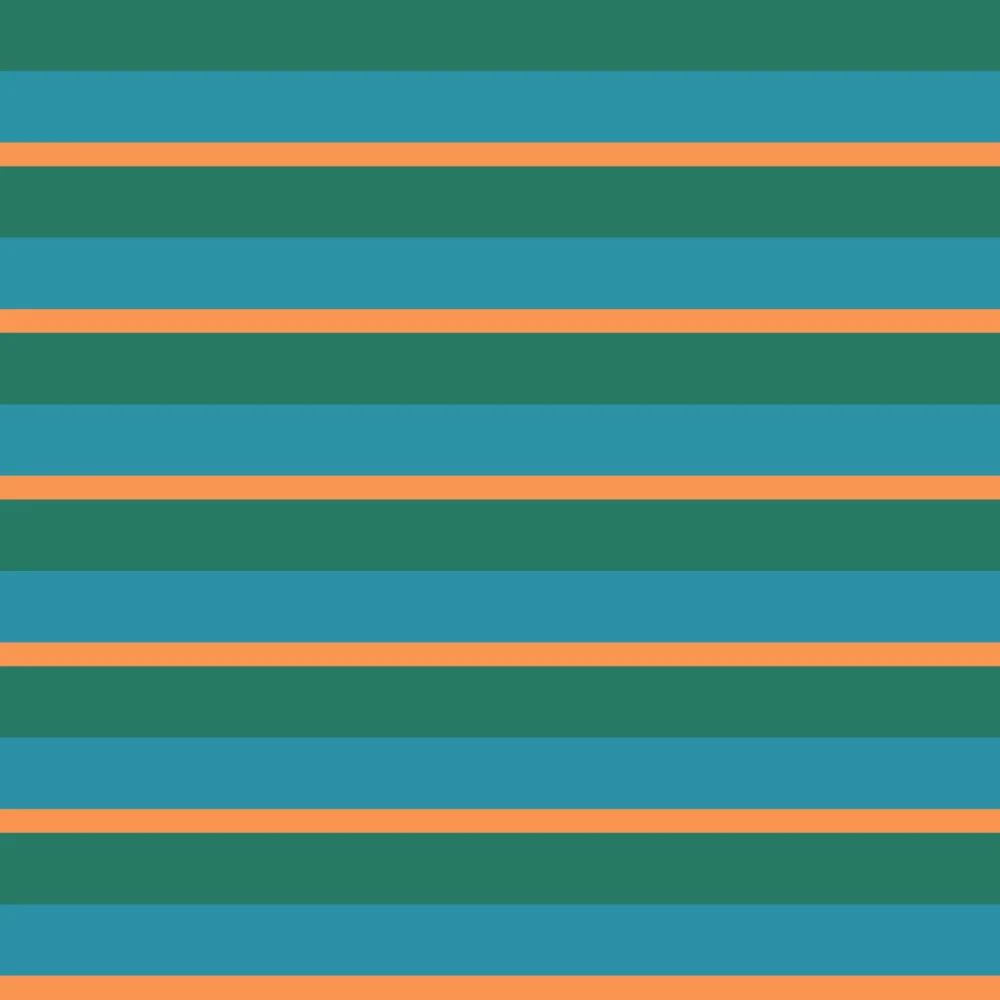
Of pieces with no variant, came out no-blend. Nothing asked their colors to agree. They do not visibly change anyway.
Positions are places in this analysis sequence, not mint numbers.
05The line moves the answer
Two units is a choice, not a law. Move the line and the counts change, the rarest ones most of all. The slider works on the first ten million hashes, the range where every piece's distances were kept. That range holds one of the two pieces above, so at 2 units it counts one.